
Bird Ringing Breakthrough: East Devon Warbler Rediscovered in Africa
The Axe Estuary Ringing Group, who regularly monitor bird populations at East Devon District Council’s award‑winning Seaton Wetlands nature reserve, have shared an extraordinary milestone with the Countryside team: their first-ever African recovery.
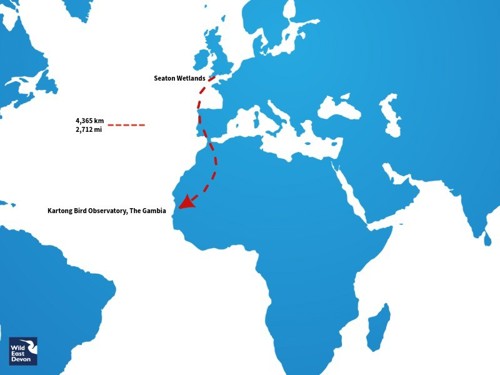
A Reed Warbler, first ringed at Seaton Wetlands on 22nd of August, has been recaptured 180 days later and 4,365 km away at the Kartong Bird Observatory in The Gambia. This exceptional find highlights the incredible journeys undertaken by these small but resilient birds as they migrate to their wintering grounds.
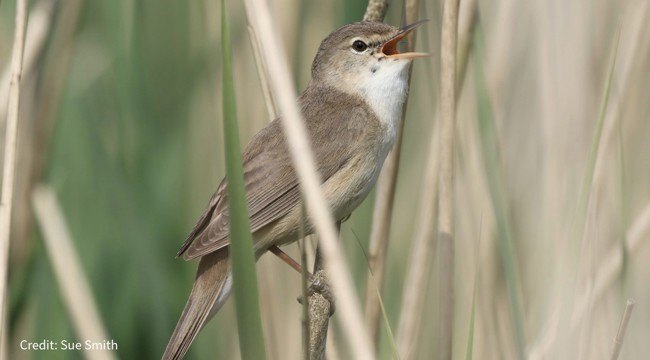
Weighing little more than a pound coin, Reed Warblers Acrocephalus scirpaceus undertake a colossal annual migration between British wetlands and sub-Saharan Africa. Arriving each April, Reed Warblers are a familiar species of the Seaton Wetlands reedbeds, their rhythmic song providing an uplifting soundtrack to spring and summer on the reserve. Most individuals depart the UK by mid‑September, travelling thousands of kilometres to spend the winter, and now we know exactly where, for one individual at least!
Ian Stanbridge, Team Leader of the Axe Estuary Ringing Group said “This is a truly exciting milestone for our group. Recoveries from Africa are exceptionally rare, and this Reed Warbler’s journey highlights just how remarkable these small birds are. Discoveries like this make all our early mornings worthwhile and provide vital data to help protect migratory species”.
Councillor Richard Jefferies, Portfolio Holder for Environment – Nature & Climate added “To see a bird ringed at Seaton Wetlands turn up thousands of kilometres away truly brings home the global importance of the work happening on our doorstep. This recovery reflects the exceptional dedication of the Axe Estuary Ringing Group and reinforces how critical long‑term monitoring is in understanding and safeguarding our migratory birds for future generations. It also highlights the incredible work carried out by the Countryside Team in maintaining and developing the reserve’s habitats, providing a safe haven where species like this can breed, thrive, and begin their remarkable life journeys”.
All data collected by UK ringing groups feed into the British Trust for Ornithology’s national records, where it plays a crucial role in understanding changes in bird populations, migration behaviour, and the conservation needs of vulnerable species.
To get involved with the Axe Estuary Ringing Group, email stan@thestanbridges.com.